Research Area
Prehistory and Cultural Evolution of Taiwan
When I first came to Taiwan, I was thinking about the present and not the past. However, as soon as I arrived, my cultural evolution brain kicked in. I asked my wife, where are the prehistoric temples, the castle walls, where were the chiefdoms, were there any prehistoric states in Taiwan? She just looked at me. Taiwan has none of that, I learned. How is that possible, this large island of mountains and plains, covered in farms today, with abundant sunlight and rainfall, and rich native ecology? An island across the strait from the great agricultural Chinese Dynasties of antiquity? A large Pacific island among other Pacific islands that held ancient chiefdoms (Samoa, Tahiti, Trobriand) and even one prehistoric state (the Hawaiian Islands)?
In between my other responsibilities, I began reading the history of East Asia, and then Southeast Asia, and then Pacifica. I learned that Taiwan was the origin place of the Austronesian migration, the farming peoples that settled nearly all of the Pacific islands, including those early chiefdoms and states. I wrote my “Pulsing and Cultural Evolution in China” paper to try to re-tell the emergence of the great states (dynasties) of China, but with a focus on the limits of slow-renewable natural resources (topsoil and forests). I produced timelines of comparative histories for China, Japan, Korea, SE Asia, and Taiwan. In 2008, I produced my first Human Adaptation and Cultural Evolution course, which featured China and also the indigenous peoples of Taiwan.
In 2010, I produced my first five-island comparative ppt for class of the historical ecologies of Taiwan, Honshu (middle Japan), Luzon (north Philippines), Hawaii (big island), and North Island (of New Zealand). All five islands are of similar size and natural productivity, and all except for Taiwan developed either chiefdoms or states. I began to ask the question, Is Taiwan an Anomaly of Prehistory? I’ll attach that ppt below (2010). Somewhere around this time I ran into the archaeologist and chiefdom specialist Tim Earle at a AAA meeting (from my favorite ‘traditional’ cultural evolution book, The Evolution of Human Societies, Johnson and Earle 1989, 2000, and one of the PhD chairs of my chair, Bill Keegan). I said, you should come to Taiwan, it would be a fascinating study for you. He said, I should.
In 2016, I discovered a fascinating geology paper about alluvial fans on Pacific islands. Amazingly, it was a comparison of Japan, Taiwan, the Philippines, and New Zealand, four of my five-island comparison. Of those four islands, Taiwan was a significant outlier for the most alluvial fans. Shortly after that, I discovered that Taiwan had an Institute of Archaeology in Tainan (I had been looking in Taipei). I contacted them and asked if I could give a talk. I’ll attach that below also (2018). Ha, by that time I was calling Taiwan a ‘curiosity’ of prehistory, not an ‘anomaly,’ which sounded derogatory. It included my five-island comparison. I threw in the kitchen sink. It proposed a number of hypotheses, mostly environmental, to explain the ‘curious’ status of Taiwan. By then, I thought the ppt was getting pretty good. Their reaction, I remember, was ‘muted’, I’d say to be polite. For professional archaeologists, I think my big theorizing was a bit too much. The one biggest achievement of the talk, I believe, was my proposal to them that they should invite Tim Earle to come and join them. He was also a favorite of one of the lead archaeologists in the institute, and he began the process of inviting him.
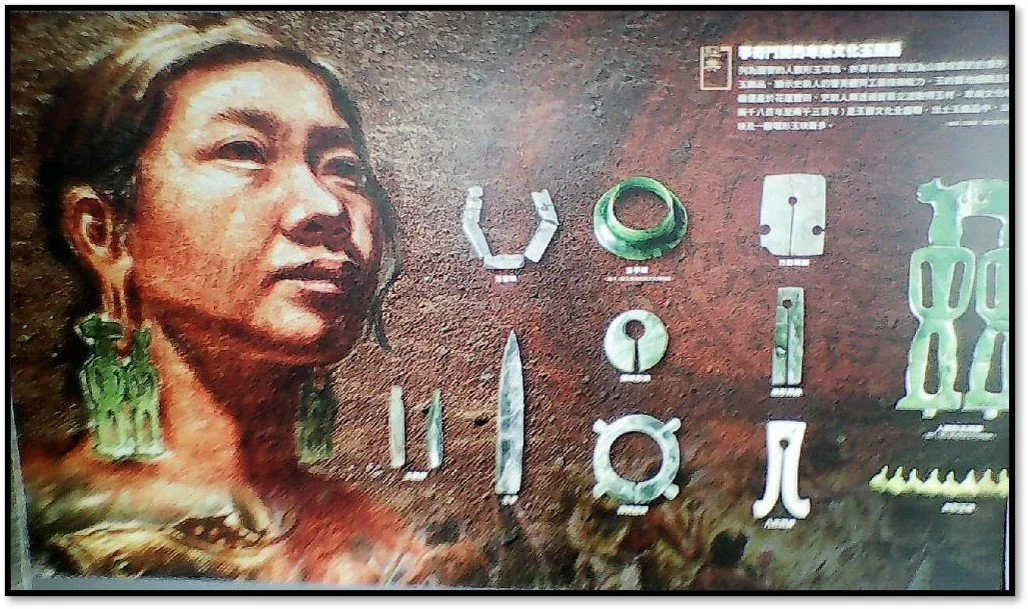
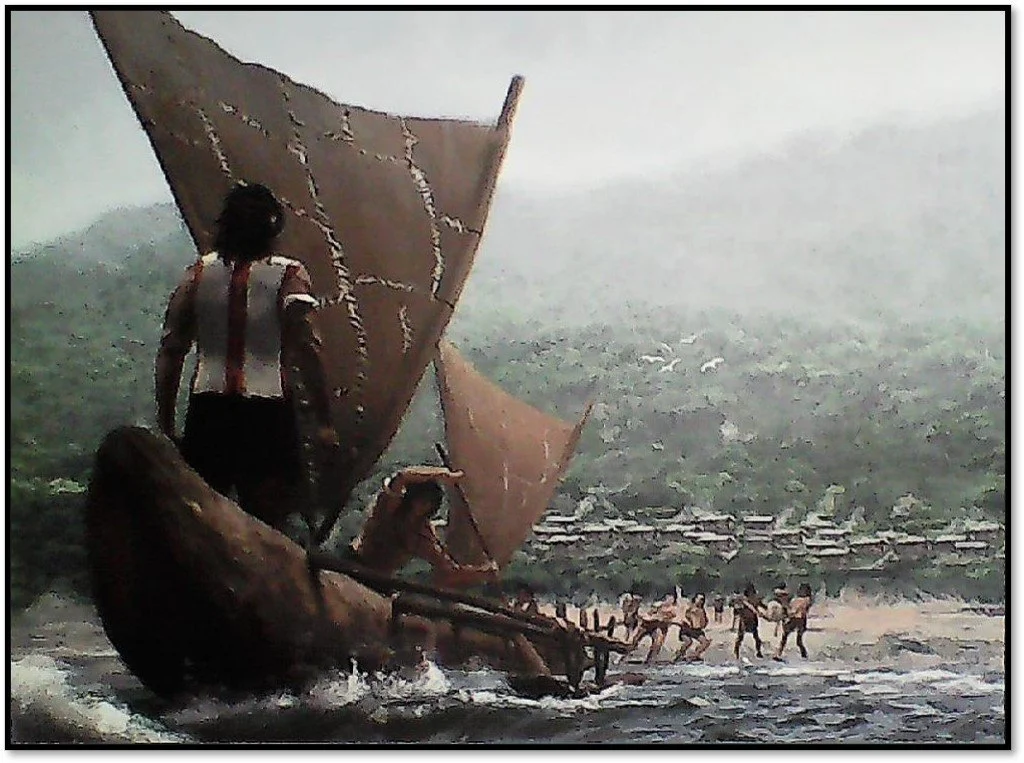
About one year later, Tim Earle came to the Institute for the month of November. This began my true education of the archaeology of Taiwan. I participated as much as I could, including a fascinating visit to the Paiwan settlement in south Taiwan. Being around those archaeologists was amazing. Tim Earle has a Maritime Model of chiefdoms, and he worked to apply it to the Taiwan indigenous peoples of the SE coast. That is the known region of origin of the Austronesian migration, and the most significant chiefdom on the island, which appeared about 4000 BP. Tim’s theoretical approach is political-economic and ecological. From reading his work and getting to know him, I now have a much greater appreciation of the role of power in the formation of human societies. It has been a bit of a revelation for me. Together with Chao, the lead archaeologist from the institute, they produced a great paper that has finally been published in Current Anthropology. It is called “Taiwanese Prehistory: Migration, Trade, and the Maritime Economic Mode,” https://doi.org/10.1086/730921.
If my theoretical approach differs from theirs, it is only in emphasis. I am fascinated by giving explanatory space to environmental constraints and human-ecological self-organization. I feel that the story of Taiwan prehistory is a perfect case to explore these themes. After the excitement of working with the archaeologists, I went back to improving my paper, which emphasizes the environmental limits to chiefdom and state formation on Taiwan. The three major obstacles are steep mountains, regular typhoon rains, and the alluvial fans that form where natural farmland appears on other islands and around the world, i.e., in river floodplains. In prehistoric Taiwan, those regions of alluvial fans were nearly uninhabitable. Today, with strict water management, those areas are the most productive farmlands in Taiwan. If you saw the Netflix movie, ‘The Three Body Problem’, you know that it is the destructive influence of the unpredictable trinary suns, that regularly destroyed the San-Ti civilizations. For Taiwan, it is not three suns, but a different type of three body problem. Hence the latest title of my paper below, that I need to finish and submit. Obviously, I love this stuff. If I was more flexible, I should have been an archaeologist.
I have produced a newest Taiwan Prehistory ppt that I used in my Human Adaptation class. I’ll include the link to it below (2021). The ppt is essentially an outline for the Three Body paper. In some ways it is superior to a paper because as a ppt it can include tangential and background topics and it allows for many valuable visualizations.
Papers
2007 “Pulsing and Cultural Evolution in China” Proceedings from the 4th Biennial Emergy Research Conference, January 12-21, 2006, Center for Environmental Policy, Gainesville, FL, Chapter 2.
This paper is my second paper that features simulation (the first was 1998 in Complex Systems). The paper tries to re-tell the emergence of the great states (dynasties) of China, but with a focus on the limits of slow-renewable natural resources (topsoil and forests).
2010 “The Cultural Evolution of Taiwan: An Anomaly of Prehistory?,” Class presentation.
This was the beginning of my five-island comparisons.
2018 “The Cultural Evolution of Taiwan: A Curious Tale of Prehistory?,” Talk given at the Institute of Archaeology, NCKU, Tainan, Taiwan, Nov 28, 2018.
My ‘kitchen sink’ talk. What it adds that is different from the work below is the five-island comparison. I still believe that is a good narrative of explanation, though as typical for cross-cultural comparisons, it is difficult to substantiate with scientific measurement.
2021 “The Prehistory of Taiwan,” Class presentation for Human Adaptation and Cultural Evolution.
This ppt is essentially an outline for the paper below. In some ways it is superior because as a ppt it allows for many visualizations.
2025 “Taiwan’s early three body problem: typhoons, steep mountains, and alluvial fans.” Ms.
This will be a BIG paper for me if I ever finish it. I was interrupted in finishing this by the 5 papers in my Recent Publications. I even chose a journal. But it will require me to dive into it again, which I keep deferring for other reasons. I could use some positive feedback from Tainan.